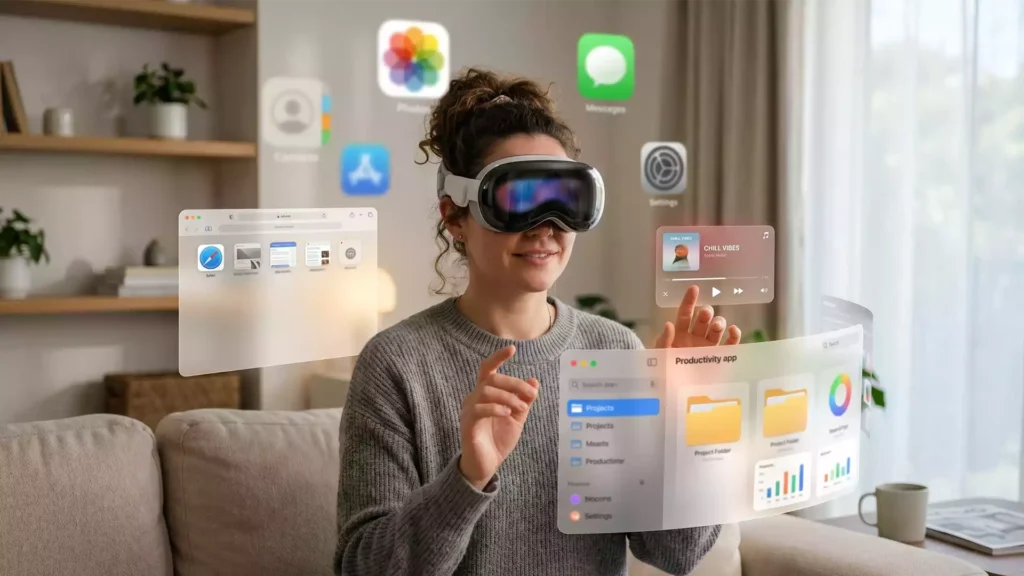
Understanding Immersive Digital Reality Environments
First, the Apple spatial computing ecosystem fundamentally transforms daily work. Users historically relied on simple flat screens for digital tasks. However, modern augmented reality headsets introduce profound 3D experiences.
Spatial computing software integration naturally allows seamless workflow transitions. Furthermore, this bold approach merges physical and digital worlds beautifully. Developers actively create exciting new Apple Vision Pro applications today. Apple continuously refines these groundbreaking spatial tools.
Key Benefits of Spatial Computing Software Integration
Next, embracing this hardware ecosystem provides immense user benefits. Professionals effortlessly expand their workspaces beyond physical desktop monitors. The Apple spatial computing ecosystem also enhances remote team collaboration. Users enjoy interacting with floating digital application windows intuitively.
Meanwhile, creators use spatial video guidelines to capture lifelike memories. Smooth software connectivity behaves much like updating your traditional Mac. Sometimes, you might even troubleshoot Mac OS Sequoia network connections. Immersive interfaces ultimately boost overall daily productivity immensely.
Expanding Apple Vision Pro Applications
Developers undoubtedly need excellent tools to build these complex environments. Apple’s VisionOS developer resources offer fantastic coding frameworks. A thriving Apple spatial computing ecosystem demands continuous app creation. Developers remain enthusiastic about pushing these new creative boundaries.
Tech reviewers at The Verge carefully track these frequent updates. Moreover, software teams must optimize their apps for battery life. Bulky unoptimized headsets might otherwise frustrate everyday consumers quickly. Interestingly, the rise of mainstream AR glasses highlights growing public interest.
Securing Immersive Digital Reality Environments
Adopting new technology clearly requires serious privacy considerations always. Apple prioritizes strict data protection within its spatial networks. Innovative spatial mapping technology accurately understands your physical room layout. Experts at 9to5Mac specifically highlight the secure eye-tracking features.
Robust system safeguards actively prevent dangerous third-party data intrusions. As a result, the Apple spatial computing ecosystem protects personal biometric data perfectly. Maintaining secure networks prevents issues like unexpected antivirus installations. Mobile users must also avoid hidden malicious phone malware daily.
The Future of the Apple Spatial Computing Ecosystem
Moving forward, this immersive technology will likely dominate the industry. Spatial integration currently leads many modern interactive media initiatives. Hardware upgrades will likely make future headsets much lighter. Home entertainment might soon adopt these mixed-reality principles too.
Visualizing mixed reality content could rival viewing advanced Micro RGB TVs. Thus, the Apple spatial computing ecosystem guarantees incredible future experiences. Embracing these immersive digital reality environments finally redefines our technological landscape completely.